

Laser link restores Taiwan Mobile network after typhoon
Wed, 18th Mar 2026
Taiwan Mobile has restored telecoms services in eastern Taiwan after Typhoon Ragasa cut a key network route, using a laser-based wireless link across a damaged river crossing.
The operator worked with Singapore-based Transcelestial and local systems integrator dBTech after the Mataian River Bridge in Hualien County collapsed in torrential rain. A communications route running beneath the bridge was severed when the structure failed.
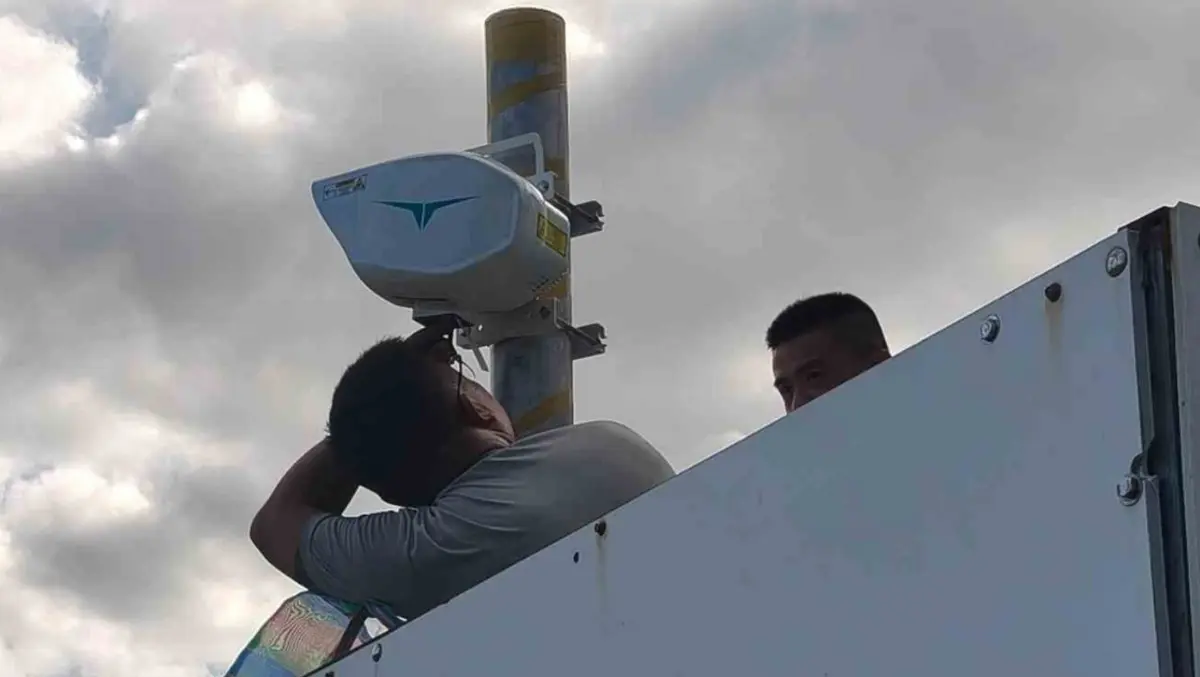
Engineers installed a 1.25-kilometre connection using Transcelestial's CENTAURI equipment. The link spanned the Mataian River between two sites, bypassing the damaged infrastructure.
Repairs to the bridge and the damaged route were expected to take close to six months because of the scale of reconstruction required. By contrast, the temporary laser link was deployed and made operational within days, restoring service without waiting for bridge works or ground access.
Laser recovery
Laser communications transmit data as beams of light through the air between two points, unlike fibre or other physical lines that often run underground or attach to bridges, towers, or other structures.
In disaster zones, damaged terrain and restricted access can delay repairs and permitting. A line-of-sight laser link can span rivers, valleys, or collapsed infrastructure without digging or civil construction.
Taiwan Mobile said disaster priorities shift from optimising network performance to maintaining service continuity for critical communications, highlighting the need for resilience against extreme weather.
"For a national telecom operator, disasters shift priorities. First responders, governments and families must have a way to stay in contact. The immediate concern is no longer peak performance, but critical service continuity and network resilience amid physical risks from extreme weather. We needed a restoration solution that could be deployed immediately, operate at high standards, and withstand harsh weather conditions in line with our disaster recovery standards. Transcelestial's laser communications allowed us to do that and we look forward to exploring opportunities to bring the benefits of this technology into further use cases within our mobile network and enterprise connectivity," said C.H. Jih, Chief Technology Officer, Taiwan Mobile.
Performance metrics
Taiwan Mobile and Transcelestial said the link has continued operating through ongoing rain and difficult weather, delivering 10Gbps full-duplex capacity and achieving a 99.9% service-level agreement.
The companies described the deployment as a complement to existing infrastructure, not a replacement for fibre routes and fixed assets. The laser link provided an alternative path while reconstruction continued at the bridge and along the damaged corridor.
The system was activated in early October 2025 and remained in operation while permanent repairs continued. The deployment also extended a relationship between the operator and Transcelestial that already included fixed installations for mobile backhaul and last-mile connectivity.
Wider implications
Extreme weather and difficult geography have long shaped network planning on Taiwan's east coast. Mountainous terrain and river crossings can concentrate telecoms routes into a limited number of corridors, so a failure at a single point can lead to prolonged disruption if alternative paths are not available.
The incident also adds to an industry focus on restoration time as a measure of resilience. Capacity and coverage remain core benchmarks, but recovery speed has become more prominent as storms and flooding intensify across the region.
Transcelestial said rapid restoration has national significance when communications underpin emergency response and public coordination after severe weather.
"Taiwan Mobile's decision to use lasers for disaster recovery sets an important precedent. It shows how countries exposed to extreme weather can restore communications quickly, even when traditional infrastructure is damaged or inaccessible. In Taiwan's case, that meant bringing communications back within days after a typhoon, rather than waiting months. That difference matters at a national level," said Rohit Jha, CEO and Co-Founder, Transcelestial.
Transcelestial said it has mass-produced its wireless laser communication technology for building-to-building and tower-to-pole links, and is developing plans for a wider network that could extend beyond cities and connect longer distances.