

Astroscale wins ESA study for in-orbit satellite upgrades
Thu, 15th Jan 2026.webp)
Astroscale UK has won a €399,000 contract from the European Space Agency (ESA) for an early-stage study into in-orbit satellite refurbishment and upgrading services, with BAE Systems involved as a prospective customer.
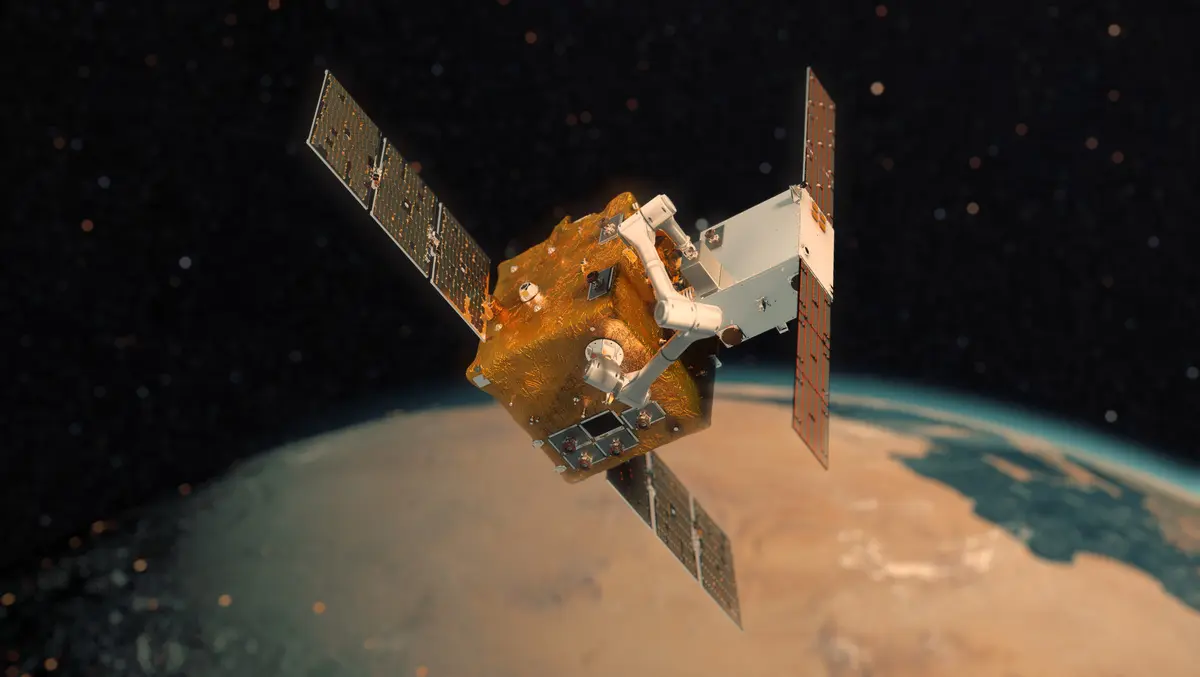
The award covers an eight-month Phase A study for a concept titled In-Orbit Refurbishment and Upgrading Service, or IRUS. The project focuses on the technical feasibility and commercial viability of servicing satellites that are already operational in orbit.
Astroscale UK stated that the concept centres on replacing degraded or outdated subsystems without the need to return the spacecraft to Earth. the study's scope includes the replacement and upgrading of batteries, solar panels, and on-board computers.
Service concept
In-orbit servicing has gathered momentum in recent years as operators look for options beyond replacement launches or end-of-life disposal. Several missions have demonstrated approaches such as inspection and proximity manoeuvres, while others have focused on debris removal or life extension.
IRUS addresses refurbishment and upgrading as a distinct service area. The Phase A activity will examine how robotics and servicing systems could connect with satellites in orbit to carry out component replacements and upgrades.
Astroscale UK stated that the study will draw on British expertise in robotics and modular design. It also includes a comprehensive business analysis aimed at defining a commercial market for refurbishment and upgrading services.
BAE Systems joins the project as a spacecraft manufacturer and operator. The company will act as a future in-orbit servicing client during the study. Astroscale UK said the mission concept will examine upgrades performed on a BAE Systems modular satellite platform.
Safety programme
The contract sits within ESA's Space Safety Programmeme, which covers activities intended to reduce risks associated with crowded orbits and long-lived debris. Astroscale UK said in-orbit refurbishment could lower the number of replacement launches and cut the chance of generating more debris.
Refurbishment concepts generally depend on rendezvous and close-proximity operations, which involve navigating to and operating in the immediate vicinity of another spacecraft. Astroscale UK stated that the study builds upon its existing Rendezvous and Proximity Operations (RPO) technology.
Astroscale has previously conducted missions involving approach and proximity operations in orbit. The company cited ELSA-d and ADRAS-J as programmes where it has successfully proven key aspects of these techniques.
Industrial interest
Governments and satellite operators have also shown interest in servicing for resilience and sustainability. Dual-use applications can span civil and defence needs, depending on mission design and customer requirements.
BAE Systems said its participation links in-orbit servicing with its space systems and defence integration work. The company framed IRUS as part of a pathway towards more resilient infrastructure in space.
"Astroscale is very pleased to have been selected by ESA for the IRUS Phase A project, a bold and exciting step towards a true circular space economy," said Nick Shave, Managing Director of Astroscale UK.
"By exploring how satellites can be upgraded and enhanced in orbit, we are helping to shape a sustainable future for space - one that delivers long-term value for operators, governments, and society in general. This study is an important milestone for Astroscale, our industrial partners, and for the UK's growing strength in in-orbit servicing and dual-use technologies that will support both civil and defence space activities," said Shave.
"We're committed to ensuring space is sustainable both now and in the future, and IRUS is an important step on that journey," said Rachael Hoyle, Director of Space, BAE Systems' Digital Intelligence business.
"By working with Astroscale, we're combining world-class in-orbit servicing expertise with BAE Systems' space systems and defence integration capabilities to develop technologies that have both civil and defence applications. IRUS demonstrates how dual-use innovation can reduce debris, lower launch needs, and build resilient space infrastructure for the UK and its allies," said Hoyle.
The European Space Agency (ESA) positioned the work as being aligned with long-term policy goals regarding space sustainability and orbital debris. The agency has established clear objectives surrounding safer operations and the reduction of debris creation, alongside technical work on future servicing and assembly concepts.
"ESA's mission to demonstrate in-orbit refurbishment is a key step toward a circular economy in space, aiming to enable sustainable orbital operations, to reduce space debris, and to extend satellite lifetimes, aligning with ESA's Space Safety Programmeme objectives," said Ross Findlay, Head of Sustainable Engineering Section at ESA. "It supports ESA's 2040 strategy and positions European industry as leaders in sustainable orbital operations. This first demonstration lays the groundwork for future ISAM missions and ESA's goal of becoming space-debris neutral by 2040."
The Phase A study will produce a mission concept and an initial commercial assessment. Astroscale UK said the work will inform potential follow-on development towards a demonstration mission.