

Panduit launches extended-reach Cat 6 copper cable
Fri, 27th Nov 2026 (Yesterday)
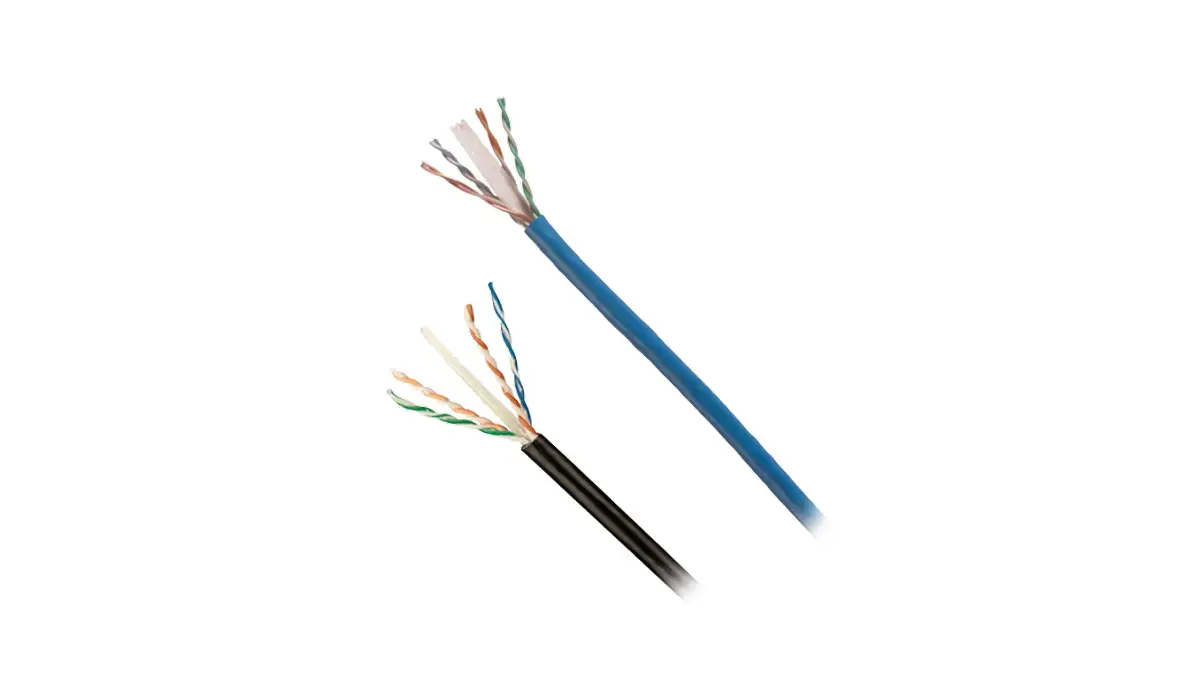
Panduit has launched its TX6-ER Category 6 copper cable for extended-reach Ethernet and Power over Ethernet connections, designed to carry network links beyond the standard 100-metre structured cabling limit.
The cable supports 100 Mbps and 1 Gbps Ethernet, along with up to 90W Type 4 PoE, at point-to-point distances of up to 150 metres. In two- or four-connector channel configurations with up to 10 metres of 24 AWG patch cord, the recommended maximum distance is 140 metres. For 10 Mbps applications, reach extends to 240 metres.
The launch targets a common issue in warehouses, industrial sites, campuses and smart buildings, where cameras, wireless access points, access-control devices and sensors are often located more than 100 metres from the nearest telecommunications room. In such settings, network designers have often had to add an intermediate distribution frame, switch, media converter or PoE extender to bridge the gap.
The new cable is intended to avoid that extra hardware by enabling a direct passive copper connection over longer distances, reducing the infrastructure required between the switch and endpoint devices.
Design changes
The product uses a 22 AWG solid-copper conductor design with enhanced insulation and adjusted twist rates. According to Panduit, the larger conductor size reduces insertion loss, lowers DC resistance and increases current-carrying capacity compared with conventional 24 AWG cable.
For PoE deployments, Panduit said its calculations show the 22 AWG design can cut cabling power losses by more than 40% compared with 24 AWG cable. Lower power loss can also reduce heat generation and improve the efficiency of power delivery to connected devices.
Those characteristics matter in distributed edge networks and industrial systems, where a single cable may need to provide both data connectivity and power to endpoints installed at greater distances. Such deployments are becoming more common as operators add connected assets across buildings and outdoor environments.
Testing claims
Panduit said reliability beyond the standards-defined distance was a major focus during development. It carried out Bit Error Rate and application testing under thermal and load conditions intended to reflect real-world use, alongside tests across different networking equipment.
According to Panduit, the validation results showed reliable Gigabit Ethernet operation at the recommended extended lengths, without throughput degradation or frame loss, under defined application and environmental conditions. It added that installers can test extended-reach installations using handheld testers with Panduit-approved extended-reach test limits.
The product meets ANSI/TIA-568.2-E Category 6 and IEC 61156-5 component requirements, according to Panduit. It also supports IEEE 802.3af, 802.3at and 802.3bt PoE applications and is designed to work with the company's existing Category 6 connectivity portfolio.
Wider context
The announcement comes as network operators and building managers seek to connect more devices at the edge of their infrastructure without adding new rooms or active equipment. In industrial and commercial sites, the cost and complexity of extending power and data to remote cameras, sensors and access systems can rise quickly once standard copper distance limits are reached.
Extended-reach copper products aim to offer an alternative to redesigning the network around additional switching points. For organisations already using copper Ethernet and PoE, a longer passive link may appeal where fibre would require conversion equipment or where a new telecommunications space would be difficult to install.
Panduit said the TX6-ER integrates with its existing Category 6 connectivity, which may help customers extend current copper installations rather than replace them outright. The company said the product was developed for connected environments where the number of intelligent devices continues to grow across buildings, campuses and industrial estates.
The added reach can help network designers remove unnecessary infrastructure between switches and edge devices, according to Panduit.