

TP-Link, Freshtel bring WiFi 7 tri-band mesh to homes
Thu, 15th Jan 2026
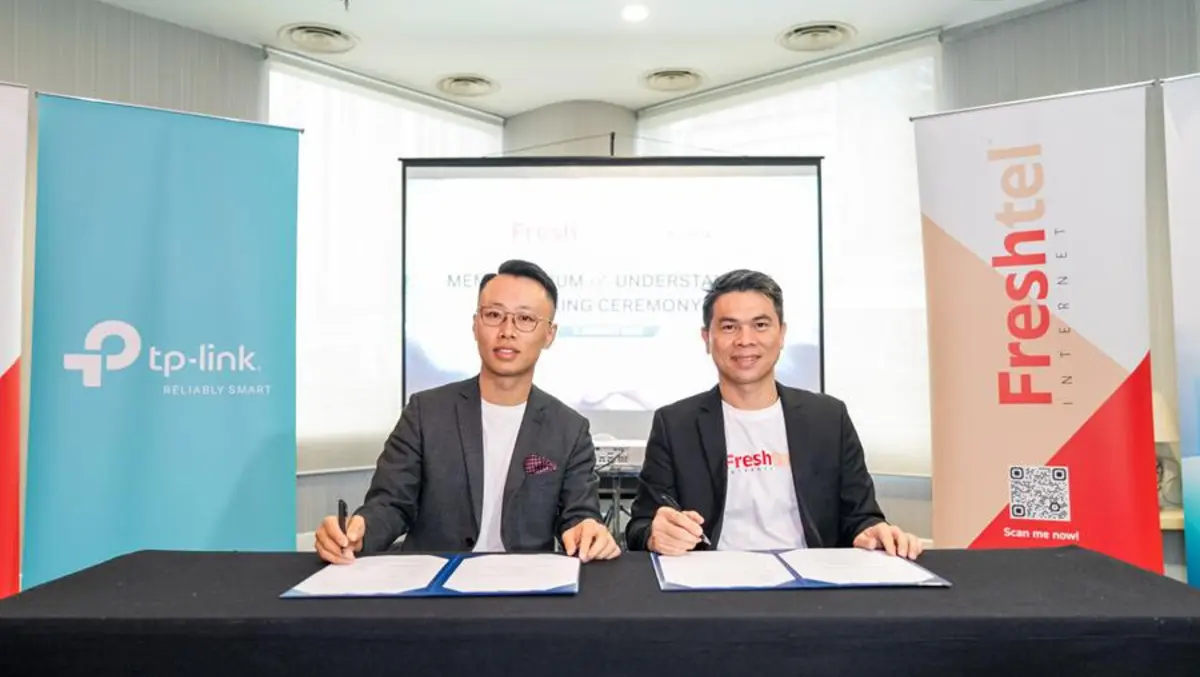
TP-Link Malaysia and Freshtel Internet have signed a memorandum of understanding that makes Freshtel one of the first internet service providers in Malaysia to adopt TP-Link's WiFi 7 tri-band mesh product for home connectivity.
Under the partnership, Freshtel Internet will integrate TP-Link's HB610 WiFi 7 Tri-Band Whole Home Mesh into its service offerings. The companies said the move reflects rising demand for reliable in-home WiFi, alongside expectations for consistent performance as households add more connected devices.
The agreement centres on a WiFi 7 product that uses a tri-band set-up. TP-Link said the HB610 includes an additional 6GHz band compared with standard WiFi 7 solutions. The company said this design reduces network congestion. It also targets smoother performance in multi-device homes.
Home performance
The companies positioned the deal as a response to customer experience issues that sit inside the home rather than on the access network. They also linked the partnership to shifting usage patterns, including higher device counts and heavier bandwidth demand in residential settings.
"WiFi performance within the home has become just as important as access speed," said Alvin Ou, Head of Enterprise & ISP Business, TP-Link Malaysia. "Through this collaboration with Freshtel Internet, we are supporting service providers with tri-band WiFi 7 solutions designed to deliver a more reliable and consistent home connectivity experience."
Freshtel framed the partnership around service quality and long-term planning for evolving consumer requirements.
"Providing a dependable in-home WiFi experience is a key priority for us. By working with TP-Link, we are strengthening our service offerings with WiFi 7 tri-band solutions while preparing for future connectivity demands as household usage continues to evolve," said Steve Choo, Chief Executive Officer of Freshtel Internet.
Managed networks
The memorandum also sets out potential work beyond standard residential installations. The companies said the collaboration lays the groundwork for future opportunities in centrally managed networking environments.
TP-Link's Omada platform features in those plans. The companies described Omada as a scalable framework. They said it could support multi-unit residences and hospitality networks as Freshtel explores additional service opportunities.
The move places Freshtel's product roadmap alongside broader industry shifts towards managed WiFi and ISP-provided home networking equipment. Providers have increasingly focused on the performance delivered inside the property, since customer satisfaction often depends on router placement, local interference and device density.
In Malaysia, that focus also connects to the spread of fibre services and the growth of higher-speed packages, which can put more pressure on in-home wireless networks. ISPs have responded by promoting mesh systems and managed devices, and by adding service layers that cover installation and troubleshooting.
TP-Link and Freshtel did not disclose commercial terms of the memorandum. They also did not specify which Freshtel packages will include the HB610 system, or whether the mesh units will be offered as standard equipment or as an add-on.
Freshtel said it operates more than 300 service locations, with coverage across the Klang Valley and service launches in Johor, Melaka, Perak and Penang. The company said it serves both condominiums and landed properties.
TP-Link described itself as a global provider of networking devices and smart home products, and said it operates in more than 170 countries. The company also said its service provider business unit focuses on home and business networking solutions for service providers and partners.
The companies said they plan to work together over the long term as connectivity technology trends and user needs change.
"WiFi performance within the home has become just as important as access speed," said Alvin Ou, Head of Enterprise & ISP Business, TP-Link Malaysia.