Liquid cooling stories
Pressure is mounting on Singapore data centre operators to secure low-carbon power as Equinix adds another solar deal and lifts its local portfolio.
Delivery bottlenecks, rather than demand, are now the main risk as AI-fuelled data centre expansion pushes revenue to USD $120 billion by 2030.
The validation could help data centre operators choose cooler fluids that cut maintenance risk as AI hardware packs more heat into racks.
Data centre operators gain more assurance as Castrol's PG25 and PG25T pass NVIDIA checks for direct-to-chip AI cooling.
Pressure is mounting on data centre operators as AI workloads push chip temperatures higher and make liquid cooling more urgent.
Rising AI heat loads are pushing data centres towards liquid cooling, as Echelon and Trinovium begin work on fluids and monitoring.
The combined design could cut installation costs and copper use sharply as operators race to build more efficient AI data centres.
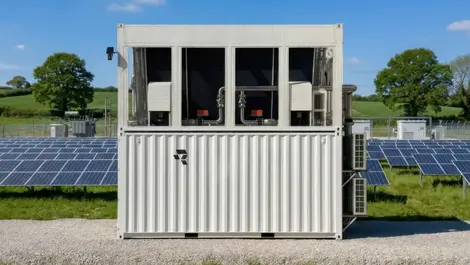
The modular units aim to ease AI compute bottlenecks by bringing 1 megawatt of capacity online in weeks, not years.
The partnership is meant to ease power and cooling bottlenecks as AI data centre demand forces operators to secure specialist systems earlier.
AI and data centre demand is forcing Vertiv's Asian resellers to rethink sales plans as the group marked a decade of partner summits in Johor.
Rising electricity demand is emerging as a bottleneck for AI deployment, with some training sites approaching 1 GW and facing delays.
The hire comes as Rubix races to secure sites and power for AI campuses, with an initial global portfolio of more than 8GW.
Rising demand for AI-ready power and cooling systems is reshaping channel work in Australia and New Zealand as customers move into deployment.
The approval gives data centre operators a pre-validated liquid cooling option as AI servers push heat loads beyond air systems.
Data centre operators could cut deployment risk and speed AI build-outs with a validated blueprint for racks drawing up to 246 kW.
The tie-up gives GCM a route into data-centre cooling as AI build-outs intensify power and water pressures on operators.
Customers facing soaring AI compute demands will get access to one of the first cloud offerings of AMD's latest large-memory GPU and rackscale system.
Demand from AI data centres is prompting Vertiv to add capacity in Italy, with chiller output set to double by 2026.
Retrofitting existing sites could ease Britain's AI capacity crunch faster than new builds, Airsys has told MPs amid power and planning bottlenecks.
Reserved capacity for new AI workloads is now open, as Vultr prepares deployments across 2027 and 2028 with AMD's latest chips.