

CampanaOne adds browser video tools for incident fallback
Thu, 26th Nov 2026 (Today)
CampanaOne has added browser-based video conferencing, video calling and push-to-talk channels to its critical event management platform, giving organisations fallback communications when standard meeting services are unavailable.
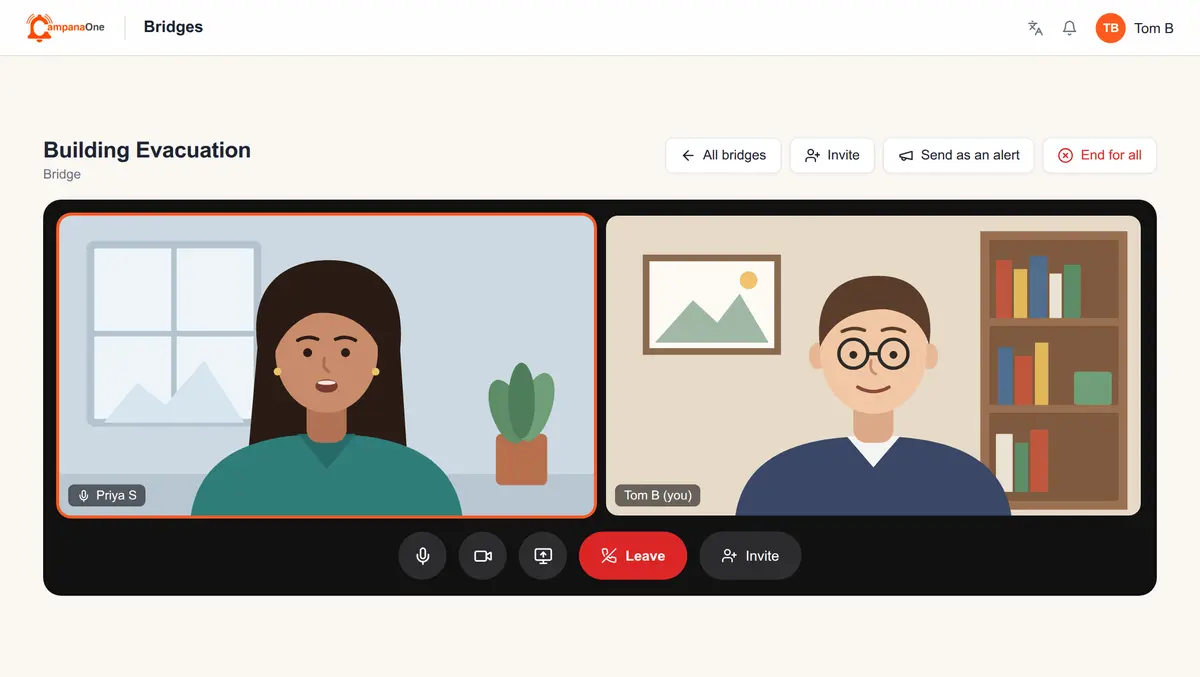
The new functions include one-to-many video conferencing, one-to-one and small-group video calls, and a push-to-talk feature called Talk. All three run in a web browser with no software installation and on CampanaOne infrastructure rather than Microsoft Teams, Zoom or Google Meet.
The move expands the platform beyond alert distribution into live incident collaboration. Users can send an alert, then move participants into a video bridge, direct video call or voice channel from the same platform.
The tools are intended for incidents such as IT outages, cyber attacks and severe weather, when primary communications systems may be affected or inaccessible.
Fallback tools
Bridges, the video conferencing feature, lets teams start a video conference and share access with internal users or external participants, including suppliers, contractors and emergency services. Invitations can be sent by SMS, WhatsApp or email using the same contact lists and channels already used for alerts. Guests can join through a browser without creating an account.
Video Calls lets users call a colleague directly from the CampanaOne portal or start a call and invite others. Talk, the push-to-talk service, is aimed at teams that need rapid voice updates without opening a full meeting.
With Talk, one person speaks at a time by holding an on-screen button or the space bar, then releasing it to listen. Conversations on that channel are not recorded.
Administrators can set limits on how many video bridges and calls can run at once, and how many participants can join each bridge. That is intended to keep usage predictable during a large-scale incident.
Eli Cobb, Chief Technology Officer at CaravelIQ, said customers had repeatedly raised concerns about losing access to their usual meeting systems during an incident.
"In our years of working with customers, we hear the same pain points in almost every discovery call," Cobb said.
"Organisations want a failover for video calls in case their main system goes down. Very few people today remember how telephone bridges worked before Covid, when Teams and Zoom were not yet part of everyday work. You dialled a phone number, entered the bridge number, then a passcode, and only once the host had opened the bridge could anyone else join. It was all over the phone, with no video and no screen share. Bridges gives teams that same independence, with the tools people expect today."
Push-to-talk
Push-to-talk has historically been associated with handheld radios used by field staff, security teams and first responders. CampanaOne is now bringing that method into a platform used for mass notifications and incident response.
The feature broadens how organisations can coordinate during a crisis, especially when short, direct voice exchanges are more useful than a full video meeting. It also brings a radio-style workflow into browser-based incident management.
"Push-to-talk is our addition to the critical event management space," Cobb said.
"As far as we know, no global provider supports push-to-talk as a modality in mass communications today, and we are proud to be the pioneers in bringing it into a CEM platform. We are already working on the next versions, which will send alerts to VHF, UHF and long-range radio devices from the same CampanaOne solution, so teams in the field are reached on the devices they already carry."
Broader platform
CampanaOne is used to send messages across several communications channels at once, including voice calls, SMS, email, WhatsApp, Microsoft Teams, desktop alerts and a mobile app. Recipients can respond with a tap or keypress, and the system collects those responses in a live report while automatically retrying contacts who do not respond through the first route.
The platform also includes incident management functions, pre-approved response plans, on-call scheduling and automations that can trigger alerts from sensors or other connected systems. The new live communications features bring conferencing and voice exchange into the same service rather than requiring users to switch to a separate product.
Cobb said that link between alerting and live discussion was central to how organisations wanted to handle incidents.
"Every minute counts once an incident starts," Cobb said.
"The alert tells people something has happened. The bridge and the push-to-talk channel are where they decide what to do about it. Having both in one place, on infrastructure that does not depend on the systems that may be down, is what our customers have been asking for."